It's Japan's version of the Fed's Jackson Hole symposium, without the trail hikes or views, and this year's gathering of global central bankers in Tokyo will focus on two uncomfortable realities: flagging economic growth and sticky inflation. The Bank of Japan and its affiliated think tank host a two-day annual conference that kicks off on Tuesday and includes prominent U.S., European and Asian academics and central bankers. The Reuters Tariff Watch newsletter is your daily guide to the latest global trade and tariff news. Sign up here.
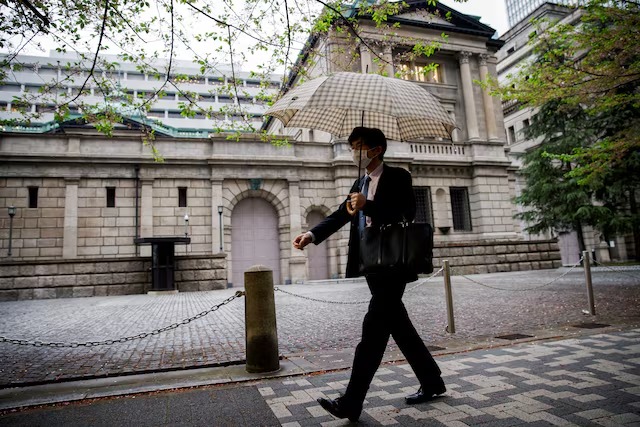
While most of the speeches are academic in nature and closed to media, this year's theme looks at "New challenges for monetary policy", specifically how central banks should deal with persistent inflation, downside economic risks, volatile markets and U.S. tariffs. Those conflicting headwinds, much of it a result of U.S. President Donald Trump's policies, are creating speedbumps for many central banks, regardless of whether they are raising and cutting interest rates. The BOJ, for example, remains on track to continue raising interest rates and steadily taper its bond purchases, a stark contrast to its rate cutting peers, but recent global developments have raised questions about the pace of such moves. Advertisement · Scroll to continue "While the BOJ may be forced to stand pat for a while, it doesn't need to ditch rate hikes altogether," said former BOJ official Nobuyasu Atago. "It just needs to communicate in a way that when the environment looks right, it can resume rate hikes." Officials from the Federal Reserve, including New York Fed President John Williams, European Central Bank, Bank of Canada and Reserve Bank of Australia are among participants of the conference, which takes place at the BOJ's headquarters in central Tokyo. At last year's meeting, participants took stock of their experience battling economic downturns by discussing lessons learned from using various unconventional monetary easing tools. They also discussed whether Japan - an outlier that kept interest rates ultra-low even as other major central banks hiked aggressively - could emerge from decades of deflation and low inflation with budding signs of sustained wage hikes. and warned Apple it could face potential 25% tariffs on foreign-made iPhones sold to U.S. customers.
While concerns this year centre on tariff-induced economic downturns, the conference's session topics indicate policymakers still sensitive to risks of being caught with persistent, too-high inflation. One session features "reserve demand, interest rate control, and quantitative tightening." Another will debate a paper published by the International Monetary Fund (IMF) in December titled "Monetary Policy and Inflation Scares." That paper explains how large supply shocks, such as one caused by the COVID pandemic, can lead to persistent inflation, warning of the dangers central banks face assuming that they can look through cost-push price pressures. ERRATIC POLICY That could be a compelling message for major central banks that face a similar dilemma exacerbated by a global trade war and Trump's erratic trade policy.