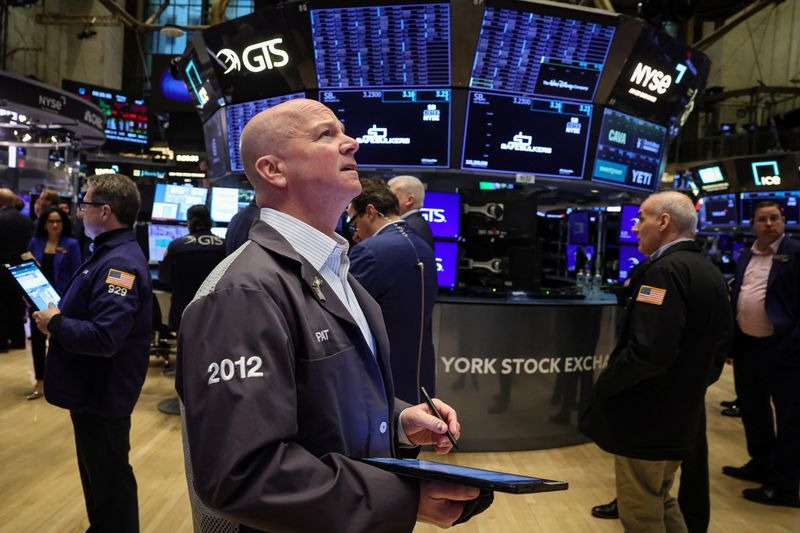
U.S. stock futures were little changed on Wednesday evening after Wall Street ended lower in the regular session, as investors digested a string of mixed earnings reports and fresh signs of rising U.S.-China trade tensions.
S&P 500 Futures inched 0.2% lower to 6,726.25 points, while Nasdaq 100 Futures fell 0.2% to 24,986.75 points by 20:18 ET (00:18 GMT). Dow Jones Futures traded 0.3% lower at 46,641.0 points.
Wall St ends lower; Tesla slides after mixed earnings In Wednesday’s regular session, major indexes closed lower. The S&P 500 fell 0.5%, the Dow Jones Industrial Average slipped 0.7%, and the Nasdaq Composite dropped 0.9%, dragged down by weakness in large-cap technology shares.
Tesla (NASDAQ:TSLA) reported record quarterly revenue of $28.1 billion, narrowly topping estimates, but net income dropped 37% as higher research and development spending and tariff-related costs weighed on margins.
The surge in revenue was driven by a rush of buyers seeking to claim the $7,500 federal tax credit for electric vehicle purchases before it expired on Sept. 30.
Tesla shares fell nearly 1% during regular trading and extended losses by 4% in after-hours trade.
Elsewhere, General Electric’s power spinoff GE Vernova (NYSE:GEV) missed profit expectations despite stronger-than-expected revenue, sending its shares lower.
International Business Machines ( IBM ) (NYSE:IBM) reported third-quarter earnings topping estimates; however, slower growth in its hybrid-cloud unit and cautious guidance weighed on sentiment. Shares fell about 5% in extended trading. Also, Apple (NASDAQ:AAPL) stock fell 1.7% after the Nikkei reported that the tech giant is “drastically” cutting production orders for its new iPhone Air model and shifting focus toward other iPhone 17 variants.
Attention now turns to U.S. consumer inflation data due Friday, a key input before next week’s Federal Reserve policy meeting.
US-China trade tensions heat up again A Reuters report on Wednesday said the Trump administration is considering sweeping restrictions on exports to China of goods made with or containing U.S. software, in retaliation for Beijing’s latest curbs on rare earth exports.
The proposed measures could affect a wide range of industries, from semiconductors and aerospace to consumer electronics, marking a potential escalation in the trade war between the world’s two largest economies.
The report comes ahead of President Donald Trump’s expected meeting with Chinese President Xi Jinping, stoking investor concerns that tensions could flare again after months of relative calm.
While no final decision has been made, the report stated that the proposal is under serious discussion as Washington seeks leverage over Beijing’s growing dominance in critical minerals.