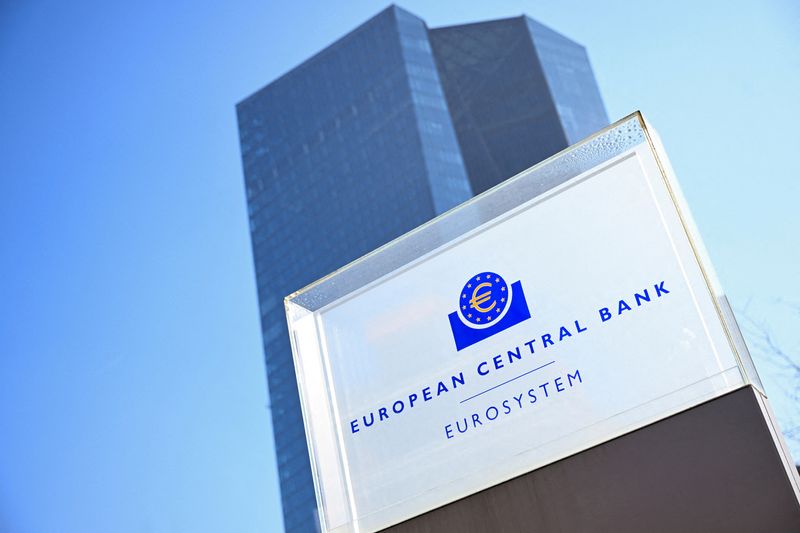
The European Central Bank is anticipated to keep its deposit rate steady at 2% at its upcoming meeting later this month, according to analysts at UBS.
In a note to clients, the analysts including Reinhard Cluse predicted that ECB policymakers will also reiterate that monetary policy is "in a good place," while stressing that the central bank will make any future decisions on borrowing costs based on economic data and won’t pre-commit to a particular rate path.
"Overall, we see next week’s gathering as an ’interim meeting’ that will allow the Governing Council to discuss the latest data (and how they compare to the September forecasts) and events," the analysts wrote.
However, they flagged that the ECB’s discussions may form a "bridge" to its "more important meeting" in December, when officials will unveil broader economic forecasts that will cover 2028 for the first time.
In September, the ECB kept interest rates on hold, with inflation largely on target, but an uncertain growth and political outlook has left open the possibility of further easing.
The ECB cut its key deposit rate to 2% in June, halving it from a record high of 4% in the space of a year. But it has since decided to pause its easing cycle with inflation now only marginally above the central bank’s 2% target after the surge in prices that followed the end of the COVID-19 pandemic and Russia’s invasion of Ukraine.
Meanwhile, policymakers see headline inflation averaging 2.1% in 2025, 1.7% in 2026 and 1.9% in 2027. For inflation excluding energy and food, they expect an average of 2.4% in 2025, 1.9% in 2026 and 1.8% in 2027.
The economy is projected to grow by 1.2% in 2025, revised up from the 0.9% expected in June. The growth projection for 2026 is now slightly lower, at 1.0%, while the projection for 2027 is unchanged at 1.3%.
"We will follow a data-dependent and meeting-by-meeting approach to determining the appropriate monetary policy stance," said President Christine Lagarde, at the press conference following the ECB decision last month. "In particular, our interest rate decisions will be based on our assessment of the inflation outlook and the risks surrounding it, in light of the incoming economic and financial data, as well as the dynamics of underlying inflation and the strength of monetary policy transmission. We are not pre-committing to a particular rate path."
There remains a great deal of uncertainty for ECB officials to navigate.
The European Union’s recent tariff deal with the Trump administration is not far off from the ECB’s baseline 10% expectation, but the actual impact on the eurozone economy remains uncertain and will increasingly feed through in the months ahead. Further escalation is also a risk with the region’s drug companies still in the crosshairs of the U.S. authorities.
If markets become more stressed, there may be a renewed focus on whether the ECB might buy bonds using its Transmission Protection Instrument scheme designed to support countries whose debt comes under pressure.
With this in mind, it is uncertain whether the ECB has ended its cutting cycle, although traders currently see a roughly minimal chance of one happening -- and it wouldn’t arrive until next summer.
"According to our base case scenario, the ECB is ’done’ and will not cut rates further," the UBS analysts said.
They added that sizeable fiscal stimulus by the EU and in Germany in support of defence and infrastructure improvements will likely "become increasingly visible from early 2026, which should alleviate the need of further rate cuts."