U.S. stock index futures fell on Monday evening after Iran denied that it had engaged in talks with Washington over a potential de-escalation in the war, which entered its fourth consecutive week.
Futures fell following an over 1% rally on Wall Street, after President Donald Trump postponed a threatened strike on Iran’s electricity grid, citing productive talks with the country.
But Iran on late-Monday denied that any talks had taken place, leaving markets in the dark over the state of the Middle East conflict, which has been a key source of market weakness in recent weeks.
Get more key insights on Wall St and the Iran war by subscribing to InvestingPro
S&P 500 Futures fell 0.6% to 6,598.0 points by 22:51 ET (00:19 GMT). Nasdaq 100 Futures fell 0.6% to 24,256.25 points, while Dow Jones Futures fell 0.5% to 46,280.0 points.
Iran denies talks with US after Trump claims ‘productive’ discussions Top Iranian officials said on Monday evening that Tehran held any talks with the U.S., contradicting Trump’s claims of “very good and productive conversations” with the Islamic republic.
Iran’s Speaker of the Parliament said in a social media post that no such conversations had taken place. Separately, Iranian state media showed senior military officer Mohsen Rezaee Miragha’ed stating that the war will continue.
The comments came shortly after Trump postponed a threatened strike on Iran’s electricity grid. The president had over the weekend issued a 48-hour deadline for Iran to reopen the Strait of Hormuz or face U.S. military strikes on its critical energy infrastructure.
Iran had largely rebuked the deadline and threatened dire retaliation.
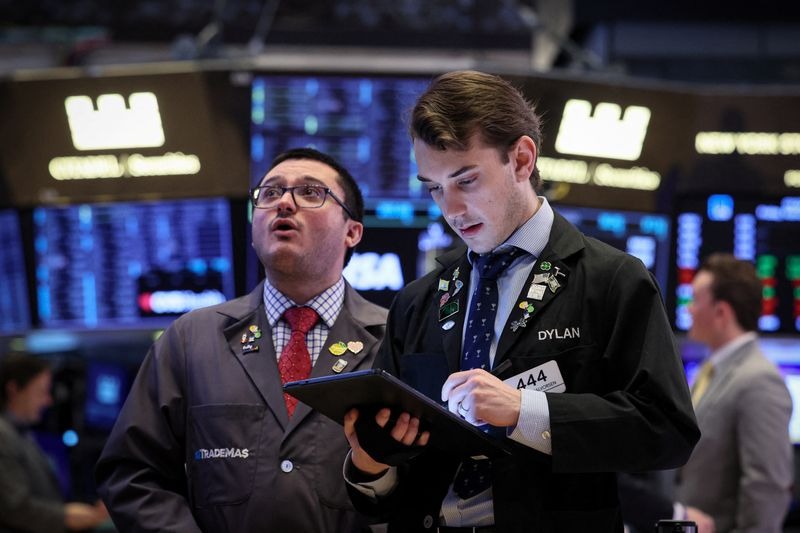
Wall St jumps over 1% on Iran de-escalation hopes Trump’s comments had sparked a rally on Wall Street and across broader risk-driven assets, with the S&P 500, NASDAQ Composite, and Dow Jones Industrial Average surging between 1.1% and 1.4%.
Wall Street was also aided by bargain buying after logging four straight weeks of losses due to concerns over the inflationary impact of the Iran war.
Reports showed that while high-level Iranian officials denied talks with the U.S., some Asian and Gulf states were relaying messages between Tehran and Washington.
But the conflict showed few signs of de-escalation as strikes between Iran and surrounding Gulf countries continued into late-Monday.
Oil prices also rebounded after Iran’s denial that talks took place, following an over 10% slump in crude prices on Monday.
The war’s inflationary impact has been a key point of concern for markets, especially as Iran’s closure of the Strait of Hormuz sparked energy market disruptions in large portions of the globe.
Markets fear that an oil-fueled increase in inflation will elicit a more hawkish stance from major global central banks in the coming months.