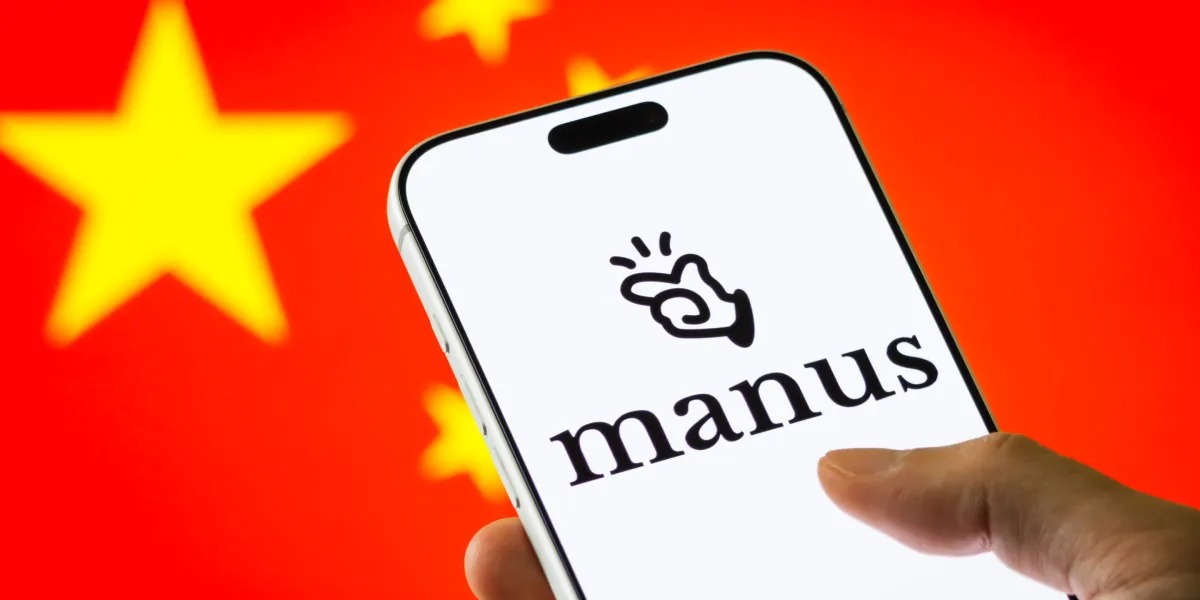
China issued sweeping new rules on Monday tightening control of overseas deals that involve Chinese investors, technology, data and national security, a month after Beijing ordered Meta to unwind its acquisition of AI startup Manus. The regulations, published by the State Council, or cabinet, seek to influence deals in markets beyond mainland China, including Taiwan, and give Beijing the power to punish foreign firms whose home countries restrict Chinese investment.
The framework, which takes effect July 1, provides a comprehensive and formalised legal basis for China to force the unwinding of completed overseas transactions, heightening compliance risks for global investors in sensitive sectors like Chinese tech and AI. Chinese authorities previously said the Meta-Manus deal violated unspecified foreign investment laws, which analysts said discouraged stake transfers by homegrown companies to foreign investors without Beijing's approval. Beijing views AI as a sensitive sector critical to national security and has made efforts to control outbound flows of technology, intellectual property and talent. Advertisement · Scroll to continue
The new rules are "largely designed to prevent Chinese firms from divesting strategic assets to foreign parties, not to stop them from acquiring them in the first place," said Han Shen Lin, China country director at The Asia Group, a U.S. consultancy. "The real story is how it codifies a full retaliatory toolkit against U.S. entities that participate in outbound investment screening of Chinese capital." One of the most significant articles requires authorisation for exports of restricted Chinese goods, technologies, services or related data. Lin said the regulations mirror and consolidate existing regulatory frameworks issued by separate Chinese ministries in the past. CROSS-BORDER TALENT TRANSFERS The new framework specifically bans cross-border talent transfers in sensitive sectors without approval, targeting the kinds of moves Manus made when it shifted employees and operations to Singapore before the Meta acquisition - a practice commonly known as "Singapore-washing". 00:07 Endangered crested ibises released into the wild in central Japan
The video player is currently playing an ad. You can skip the ad in 5 sec with a mouse or keyboard They could affect Chinese firms wishing to move capital and operations abroad to attract investment in more liquid overseas capital markets and to escape intense domestic competition. Investors "shall not transfer goods, technologies, services and related data that are prohibited from export... by means of sending technical personnel across borders, organising personnel to work in other countries (regions), providing technical guidance across borders, or arranging cross-border training." They also give the State Council authority to conduct security reviews of overseas investments or asset transfers that may affect national security, order investors to dispose of shares or cease investment, and impose fines for non-compliance on individual investors. "It is becoming increasingly difficult for Chinese investors to invest abroad independently of state oversight," wrote Henry Gao, a law professor at Singapore Management University, on X.
"The move also suggests growing concern in Beijing over capital outflows and pressure on China’s foreign exchange reserves." Monday's regulations also give Beijing the power to ban foreign entities from trading with or investing in China, and even cancel their foreign employees' China work or entry visas if their home countries restrict Chinese investment. For example, if the U.S. government puts a Chinese tech firm on a sanctions list, Beijing can retaliate by blocking a U.S. firm's unrelated acquisition of a Chinese-linked entity. The rules did not specify which types of deals or asset transfers would be banned due to national security considerations, and apply to investments in Hong Kong, Macau and Taiwan.
Numerous Chinese tech firms have opted to list in Hong Kong in recent years due to geopolitical rivalry with the U.S., while Taiwan is a democratically governed island that China claims as its own territory.
The new regulations follow two new supply chain security decrees published by the State Council in April, which grant Beijing the power to impose exit bans on employees of foreign companies involved in enforcing foreign sanctions against China. Unlike new legislation debated by China's parliament, those measures were introduced without warning and took immediate effect, sparking concern among the foreign business community in China.
Analysts say that China is building up its export control legal toolkit to counter Western sanctions, bolster its dominant position in global supply chains and domestic self-reliance in critical goods and sensitive sectors like technology.
China last week also announced a major crackdown on cross-border investment and said it would punish three online brokers it accused of illegally moving money to foreign markets.