Most Asian currencies moved in a tight range on Monday as focus remained on a potential escalation in the U.S.-Israel war on Iran, with most regional currencies nursing recent losses.
The Japanese yen fared better than its peers after Bank of Japan Governor Kazuo Ueda struck a somewhat hawkish tone in a parliamentary address, while top officials warned of potential moves against speculation in currency markets.
The dollar index and dollar index futures were flat in Asian trade after rebounding back above the 100 point level last week, as rising oil prices due to the Iran conflict saw markets further pare back expectations of interest rate cuts by the Federal Reserve.
The dollar showed little reaction to U.S. President Donald Trump stating that negotiations with Iran were going well, and that a ceasefire could be close.
Get more key insights on currency markets by subscribing to InvestingPro
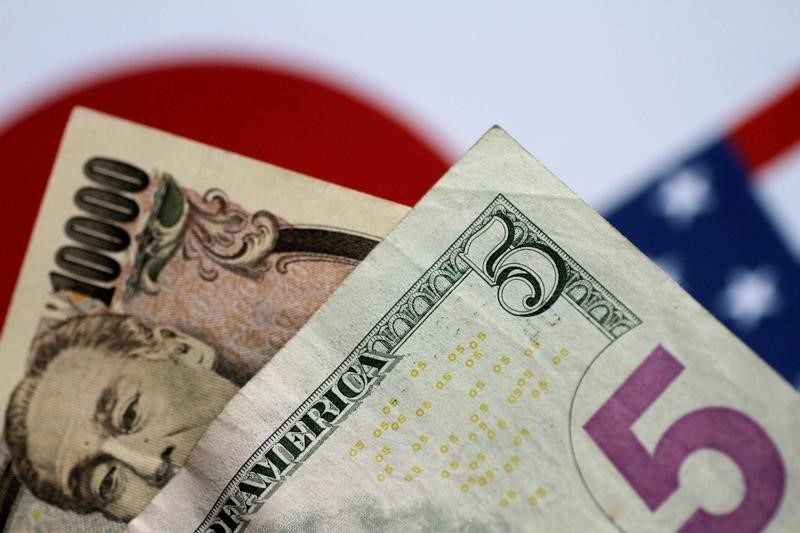
Japanese yen recovers from 2024 lows on BOJ, intervention signals The Japanese yen’s USD/JPY pair fell 0.4%, falling back below the 160 yen level as the yen recovered from its weakest levels since July 2024.
The yen was aided by intervention threats from Japanese officials. Top currency diplomat Atsushi Mimura said on Monday that authorities may need to take “decisive steps” if speculation against the yen persists.
His comments were the strongest yet verbal warning on potential currency market intervention in Japan. USDJPY testing the 160 yen level has invited intervention in the past two years.
Separately, BOJ Governor Kazuo Ueda told parliament that the central bank would closely watch yen moves and their effects on import-driven inflation.
His comments suggested that the BOJ could hike interest rates in the coming months to strengthen the yen and offset higher inflation from imports, especially amid rising energy prices.
Asia FX muted with Iran escalation in focus Broader Asian currencies moved in a tight range on Monday. The Chinese yuan’s USD/CNY pair was flat, while the South Korean won’s USDKRW pair rose 0.5%.
Risk appetite in the region remained largely frail as markets fretted over the impact of a prolonged war in Iran, which has dire implications for the flow of oil through the Strait of Hormuz.
Iran allowed 20 Pakistan flagged tankers to pass through the Strait over the weekend, but has kept the passage effectively closed over U.S. and Israeli aggression.
The war could enter a new front after Yemen’s Houthis attacked Israel over the weekend. The Houthis, who are backed by Iran, have the capacity to launch attacks in the Red Sea.
Several Asian economies depend heavily on energy flows from the Middle East, leaving them vulnerable to prolonged supply disruptions.
India is chief among these economies. The Indian rupee weakened to a record low of 95 rupees to the dollar last week. But the USD/INR pair fell sharply on Monday after the Reserve Bank of India tightened limits on foreign exchange speculation in local markets, sparking dollar selling by domestic traders.
Among other Asian currencies, the Singapore dollar’s USD/SGD pair was flat, while the Australian dollar’s AUD/USD pair fell slightly.