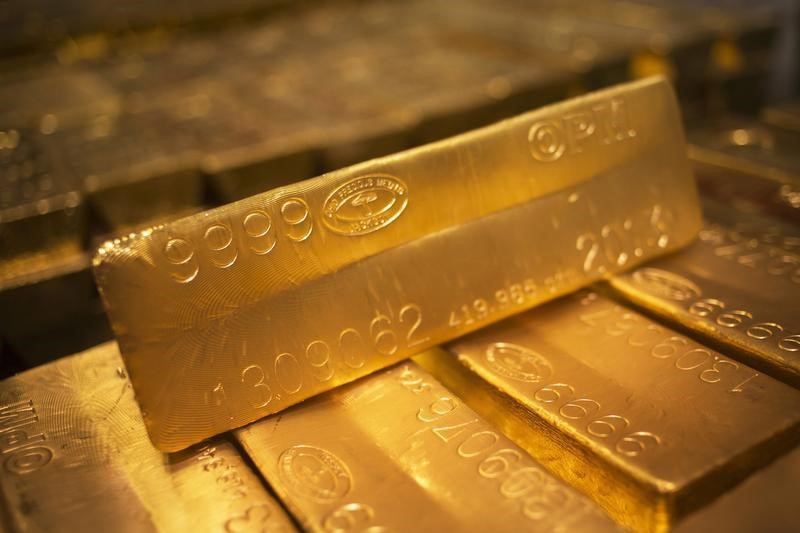
Gold prices inched up on Friday, helped by a weaker dollar, after the U.S. and Iran signaled that they were going to meet for a second round of talks in Pakistan. However, the yellow metal was on track for a weekly decline, as soaring oil prices fanned worries of an energy-fueled inflationary shock and higher-for-longer interest rates.
Spot gold added 0.3% to settle at $4,710.57/oz, while gold futures settled a smidge higher at $4,725.40/oz.
Get gold market insights with InvestingPro - now 50% off
Dollar slips as planned peace talks boost risk sentiment Bullion was given a lift by a weaker dollar, as investors shunned the currency’s safe haven status and piled into risky equities. A weaker greenback tends to increase dollar-denominated gold’s appeal for foreign buyers.
The risk on move came after the U.S. and Iran said they would be meeting for more peace talks.
Iran’s foreign minister Abbas Araghchi said he was "embarking on" a "timely tour of Islamabad, Muscat, and Moscow." Iran’s state media and the Associated Press had earlier reported about the visit, though neither said anything about Araghchi meeting U.S. negotiators.
"Purpose of my visits is to closely coordinate with our partners on bilateral matters and consult on regional developments. Our neighbors are our priority," the foreign minister said on X.
White House Press Secretary Karoline Leavitt then confirmed a CNN report that U.S. Special Envoy to the Middle East Steve Witkoff and American businessman Jared Kushner will be traveling to Pakistan for more talks on Saturday morning.
"The Iranians reached out, as the president called on them to do, and asked for this in-person conversation, so the president is dispatching Steve and Jared to go hear what they have to say. And we’re hopeful that it will be a productive conversation and hopefully move the ball forward towards a deal," Leavitt told Fox News.
Gold headed for weekly loss For the week, spot gold had slipped 2.5%, while gold futures had shed 3.2%.
The decline came amid a big jump in oil prices, with benchmark contracts posting their best weekly gain since the start of March. A flurry of naval activity in and around the Strait of Hormuz has kept tensions high between the U.S. and Iran, while Tehran continues to take issue with an ongoing American naval blockade.
The surge in oil has reignited concerns that price pressures could intensify, leading central banks to consider hiking interest rates. Non-yielding assets like gold tend to underperform in elevated rate environments.
"Clarity over the next phase in the Middle East conflict is in short supply, and it now looks as though inflation pressures may be broadening," analysts at ING said in a note.