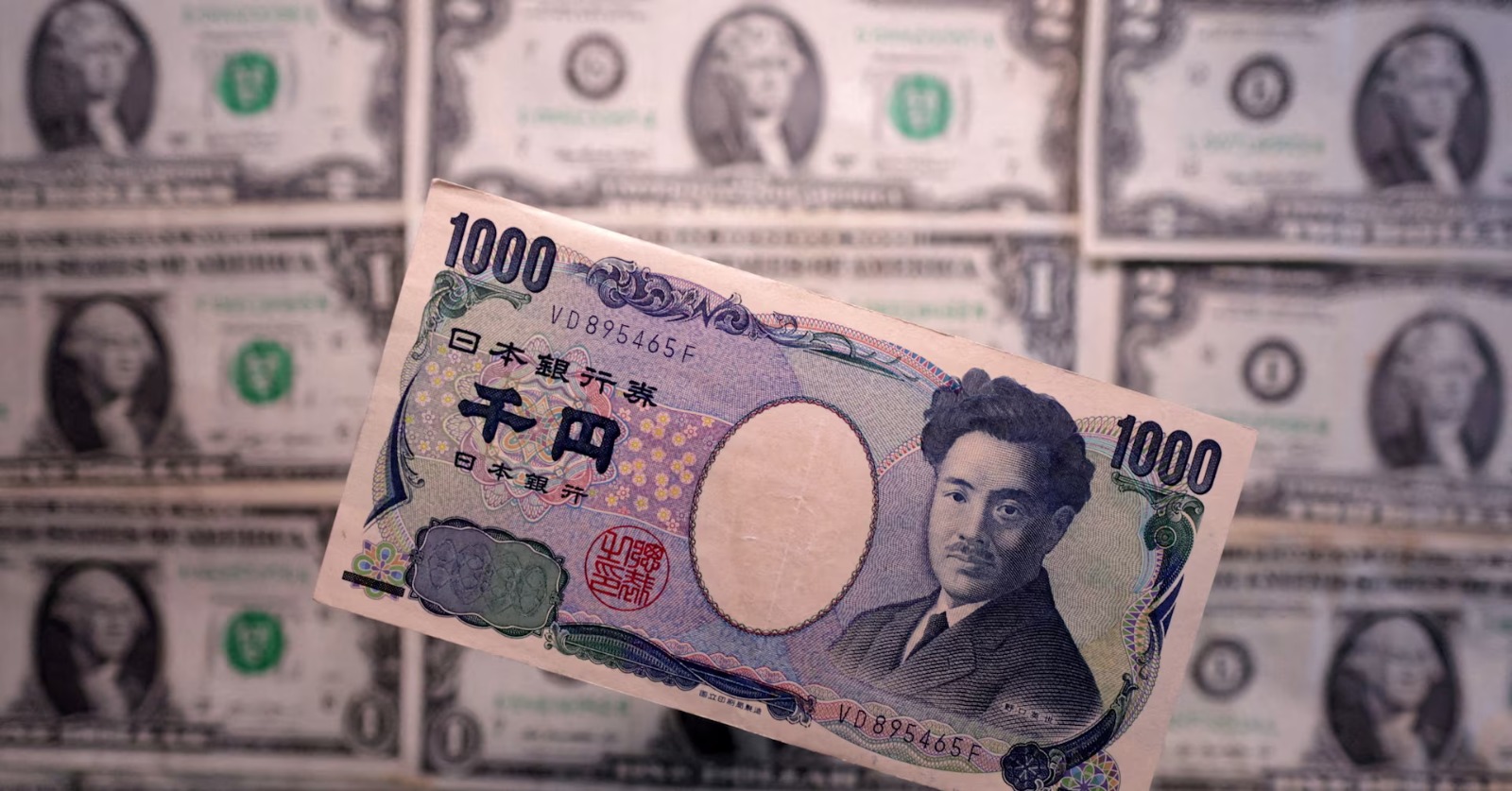
The yen's break through a long-defended 162-per-dollar level to its weakest in four decades has reinforced expectations Japan may tolerate more yen weakness, with 165 increasingly viewed as the next line in the sand for official intervention. Unlike past rounds of dollar selling, analysts say Tokyo is likely to prefer avoiding a fight at current levels where it believes intervention would only have a limited impact.
Previous interventions have failed to reverse the yen's decline, and now there is the added problem of a resilient dollar bolstered by elevated interest rates and geopolitics. With factors too big to change, Japan's intervention framework is evolving, analysts say.
"Intervention is increasingly driven by speed and disorder rather than a fixed level as markets grow comfortable fading policy signals," said Masahiko Loo, senior fixed income strategist at State Street Investment Management. The 163-165 zone is the next threshold to watch, he said. "Warnings have been front-run and lost their effectiveness, so shifting to strategic ambiguity helps restore the shock value of actual intervention."
The dollar-yen rate, which remains under pressure despite the Bank of Japan's latest rate hike this month, crossed the 162-level on Tuesday for the first time since 1986, exceeding a level perceived to be a ceiling for policymakers. The move has effectively erased the impact of Tokyo's record 11.7 trillion yen ($72.2 billion) intervention campaign in April and May, leaving investors confident the dollar can climb toward 165 before the authorities act again. Finance Minister Satsuki Katayama reiterated her warning that authorities stood ready to respond to currency moves, but verbal warnings by her and other Japanese policymakers have failed to nudge the dollar-yen rate lower of late.
A weakening trend for the yen accelerated when fiscally dovish Sanae Takaichi rose to the premiership last October and then again as the war in Iran sent prices for imported oil sharply higher, hammering Japan's terms of trade. The Bank of Japan's rate hike this month came too late to bolster the currency, which is now largely at the whim of broad-based dollar strength and expectations for rate hikes by the Federal Reserve and other central banks. "The best policy for Japan is for the BOJ to speed up its hike frequency to let the market know it is becoming more active in supporting the yen," said Takuji Okubo, the chief economist of Japan Macro Advisors. "And if that is not sufficient and the yen falls further toward 165, FX intervention will be sensible."
When the dollar-yen rate rose to 160.725 on April 30, then a near two-year peak, Japan engaged in what is believed to be multiple rounds of dollar-selling intervention, driving the pair down to 155 by May 6. But the effect did not last, with the currency pair grinding steadily higher while speculative bets against the yen accumulated, and now remain near a two-year high.
That could work in Tokyo's favour if it chooses to strike, as investors who bet against the yen would be forced to buy it back to close out their positions. "Given the accumulation of yen shorts, we would expect the impact to be significant if intervention were to be carried out," said SMBC foreign exchange strategist Hirofumi Suzuki.
A difference maker in the playbook would be if the U.S. joins Japan in coordinated intervention. Japanese officials have frequently cited a joint statement signed with Washington last September that allowed for such action to combat excessive volatility. "The probability of action rises materially and coordinated signalling with the U.S. Treasury cannot be ruled out—especially if a break above 163 triggers stop-driven momentum toward 165," State Street's Loo said. Daisaku Ueno, chief FX strategist at Mitsubishi UFJ Morgan Stanley Securities, noted the vicinity of 169 yen — representing a 50% retracement of the decline from the pre-Plaza Accord high of 262.80 in February 1985 to the record low of 75.31 in October 2011 — could serve as a near-term upside target for the dollar-yen pair.
If the 50% retracement level is cleared, Ueno said, "no distinct psychological or technical milestones can be found on the upside until around the 260 yen mark."
The next major hurdle for yen watchers will be labour data in the U.S. on Thursday, followed by a trading break for the July 4 holiday. A hot jobs figure would raise bets for an earlier hike by the Fed, boosting the dollar.