A combination of stubborn inflation, shifting expectations about interest rates, and changes in investor behavior could keep pressure on bond prices and drive yields even higher in the weeks ahead, analysts said. Get a daily digest of breaking business news straight to your inbox with the Reuters Business newsletter.
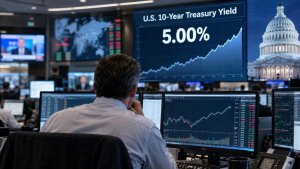
For months, many investors have viewed the 4.5% yield on the benchmark 10-year note as an attractive point to step in and buy bonds. But as yields surged through that level, market participants adjusted their view of where buyers would next bite.
The question going forward is: will guys really buy here because I believe this (selloff) will continue to persist," said Padhraic Garvey, head of global rates and debt strategy at ING.
"We're probably headed to 4.75% in the next round," he added, citing several underlying forces that continue to fuel the selling. The 10-year yield was last at 4.62% .
Rising benchmark yields pose a challenge for U.S. stocks, as higher borrowing costs weigh on companies and consumers. A key driver, however, remains inflation: recent consumer and producer price data have come in stronger than expected, reinforcing the view that price pressures are not easing as quickly as markets had hoped. With more data due, particularly for May, analysts expect inflation to stay elevated.
If bond investors believe inflation will stay high—or even rise further—they would demand higher yields to compensate for the loss in purchasing power.
Market-based measures of long-term inflation expectations, or so-called breakevens, rose to 2.507% on the benchmark 10-year note on Friday, close to a three-year high. Breakevens reflect, in part, investor confidence in the Federal Reserve's ability to rein in inflation over time. ING's Garvey warned that even a small increase in inflation expectations—to around 2.6% or 2.7%—could push yields noticeably higher. "That's
how you get the next 10, 20, 30 basis points into the upside in yields very easily." This suggests that the market may not have fully priced in the risk of sustained inflation yet. Investors are now beginning to consider the possibility that the Federal Reserve could hold rates steady for longer, or even raise them if inflation does not ease.