The World Bank is holding discussions with approximately 30 to 40 countries over potential financial assistance as rising energy prices, inflationary pressures, and mounting debt obligations place increasing strain on developing economies.
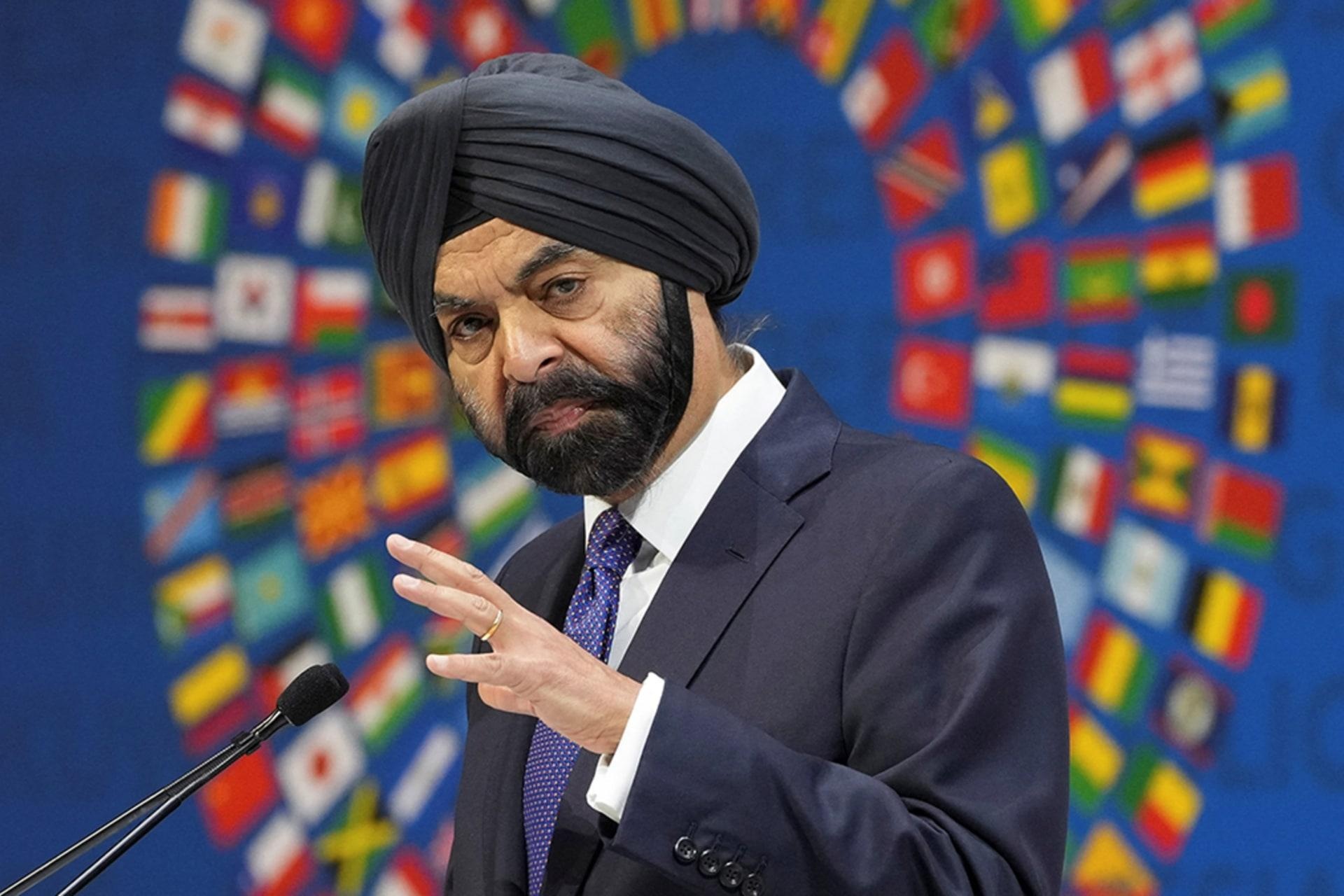
World Bank President Ajay Banga confirmed the discussions in an interview on October 11, 2026, ahead of the annual meetings of the World Bank and International Monetary Fund (IMF) in Bangkok, Thailand.
The talks come as developing nations face growing financial challenges linked to the conflict in the Middle East, which has disrupted global energy markets and contributed to higher fuel and fertilizer prices.
Banga explained that the global economy has demonstrated resilience despite significant geopolitical and economic pressures, partly supported by substantial investment in artificial intelligence and adjustments in global oil supply and demand.
This resilience initially limited demand for the $25 billion in emergency financial support made available by the World Bank following the outbreak of the conflict earlier this year.
However, increasing diesel and fertilizer costs, combined with the possibility of severe weather associated with a developing super El Niño, are creating additional risks for countries already struggling with limited public resources.
According to Banga, developing nations could potentially access between $50 billion and $60 billion in available resources, combining the initial emergency financing with funds redirected from previously approved World Bank projects.
The institution could expand its available assistance to as much as $100 billion if economic conditions deteriorate further, although no decision to deploy that amount has been announced.
Many developing countries are facing elevated borrowing costs and significant debt-servicing obligations after years of economic disruption linked to the COVID-19 pandemic, global inflation, and geopolitical instability.
World Bank estimates indicate that developing countries are expected to make approximately $400 billion in external debt payments during 2026, with interest accounting for roughly one-third of the total.
These obligations are placing additional pressure on national budgets and reducing the resources available for public investment, infrastructure development, healthcare, education, and other essential services.
Banga indicated that many countries have shown greater interest in restructuring or redirecting existing World Bank projects than immediately requesting new emergency funding.
Alongside its crisis response efforts, the World Bank is working to attract additional private investment into developing economies.
The institution mobilized a record $112 billion in private capital during the financial year ending in June 2026, compared with $69 billion in the previous year.
Combined with approximately $123 billion committed through the World Bank's own resources, total investment and financing reached around $235 billion during the period.
Despite this growth, private capital remains unevenly distributed, with upper- and middle-income economies attracting a significantly larger share than the world's poorest countries.
The World Bank is consequently expanding efforts to improve investment access for low-income nations through political risk guarantees, local-currency financing, regulatory reforms, and initiatives supporting smaller businesses.
The institution is also coordinating with the IMF on approaches to managing sovereign debt pressures, including efforts to strengthen domestic revenue collection and introduce financing arrangements that reduce debt-servicing costs.
Banga said the World Bank has approximately 14 to 15 debt-for-development transactions under consideration, designed to replace expensive debt with more affordable obligations backed by financial guarantees.
The potential savings from these arrangements could be directed toward development priorities such as education, healthcare, water infrastructure, and environmental programs.
The discussions highlight the increasing financial vulnerabilities facing developing economies as governments attempt to balance debt repayments, economic stability, and public spending requirements.
With geopolitical tensions, energy market volatility, and climate-related risks continuing to influence global economic conditions, the World Bank's ongoing negotiations could play an important role in determining how vulnerable countries respond to further financial shocks.